
"And the Word became flesh and lived among us, and we have seen his glory," writes John the Evangelist. The windows of St. Peter's bear witness to that glory in glass, telling the Christian story in light and color, surrounding the worship of this community.
The chapel windows at St. Peter's tell two intertwined stories: the life of Christ and the life of this parish. Most were designed by two figures central to St. Peter's history, the Rt. Rev. R. Bland Mitchell, Bishop of Arkansas (1938–1956) and the Rev. Limuel G. Parks, vicar from 1963 to 1970. When the congregation moved into the present building, sixteen windows came with them. These sixteen are also viewable in the interactive schematic. -Adapted from The Stained Glass Windows of St. Peter's by Elizabeth Pope (December 1996).
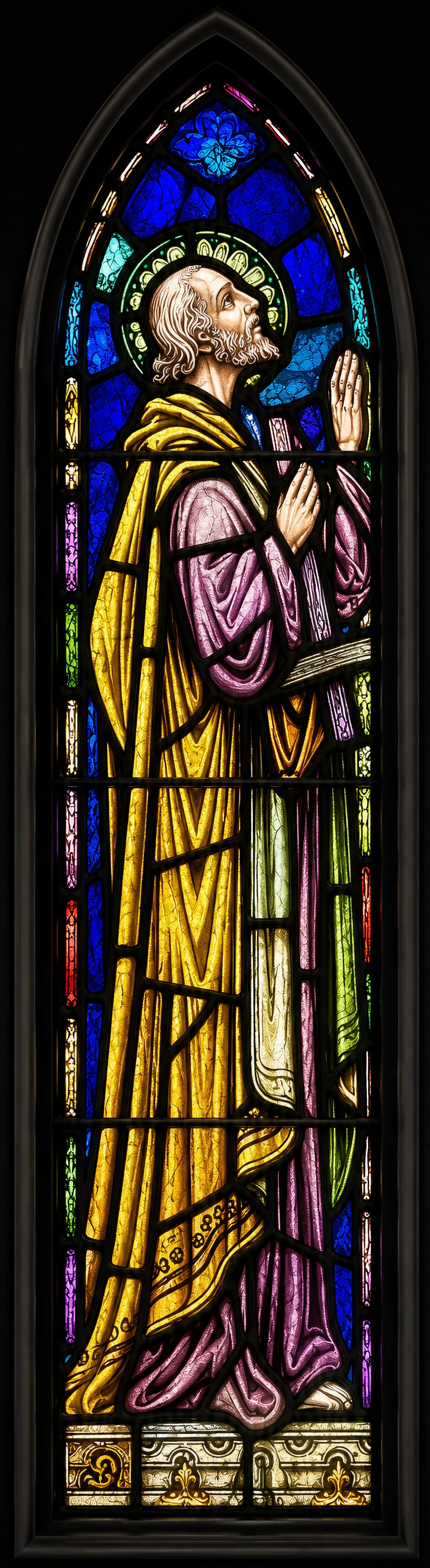
St. Peter. To Jesus' right, our patron carries an inverted cross — a reference to the tradition that Peter, martyred under Nero, asked to be crucified upside down, judging himself unworthy to die as his Lord had.
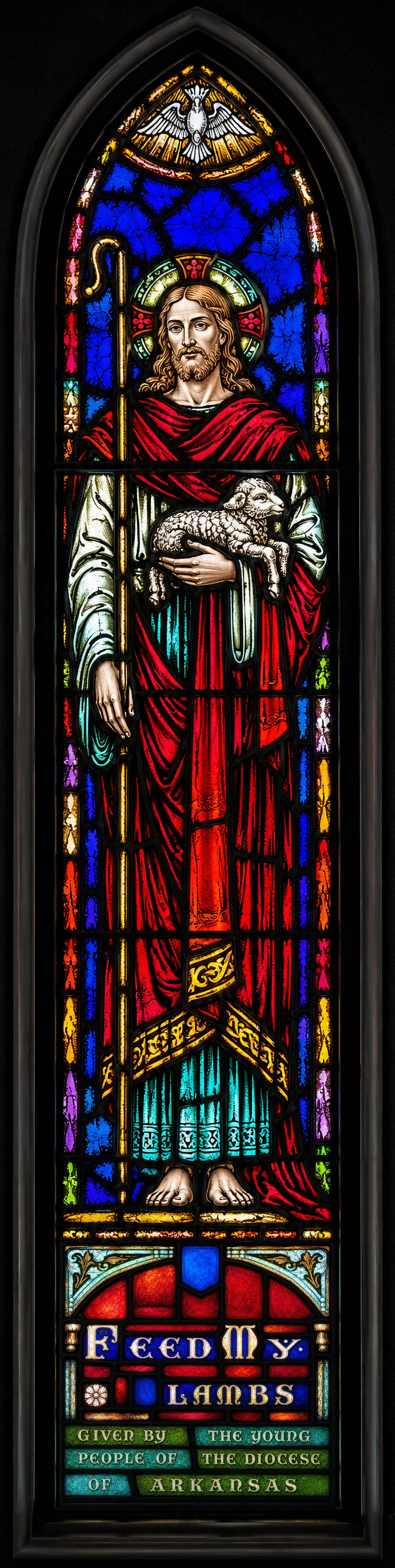
The Good Shepherd. Above the altar, Jesus holds a lamb and a shepherd's crook beneath a descending dove. The artist depicts Christ as he appeared to the disciples after the Resurrection, when he said, "Feed my lambs" (John 21:17).
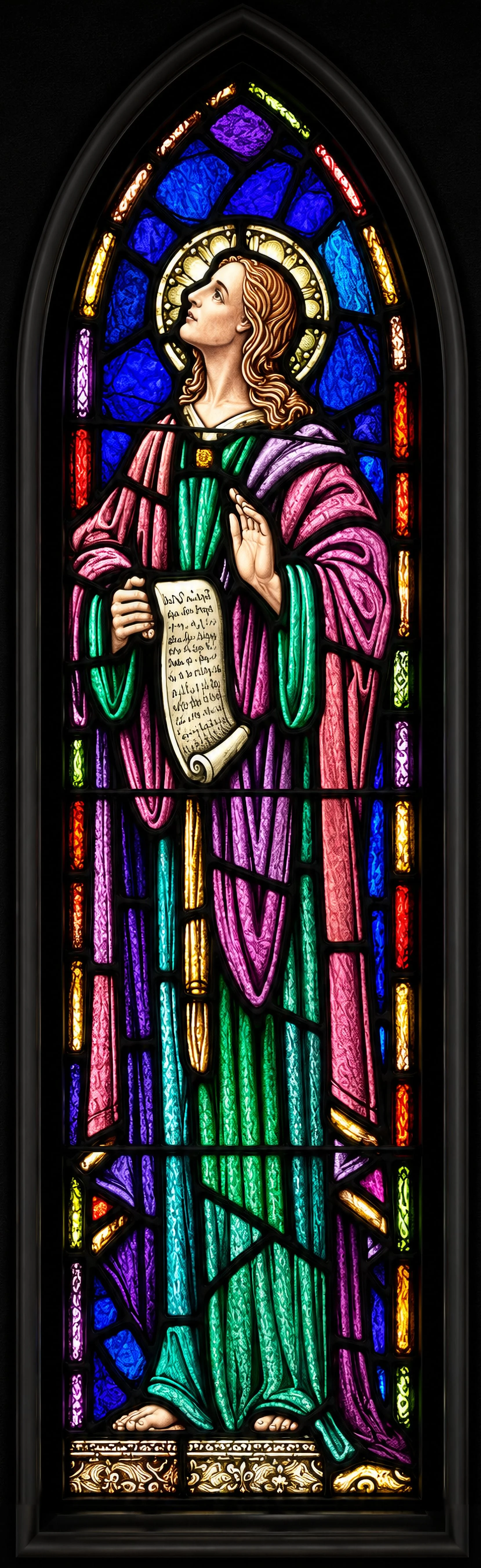
St. John the Beloved. To Jesus' left, the younger disciple holds a scroll, marking him as author of the Fourth Gospel. Word and Sacrament.
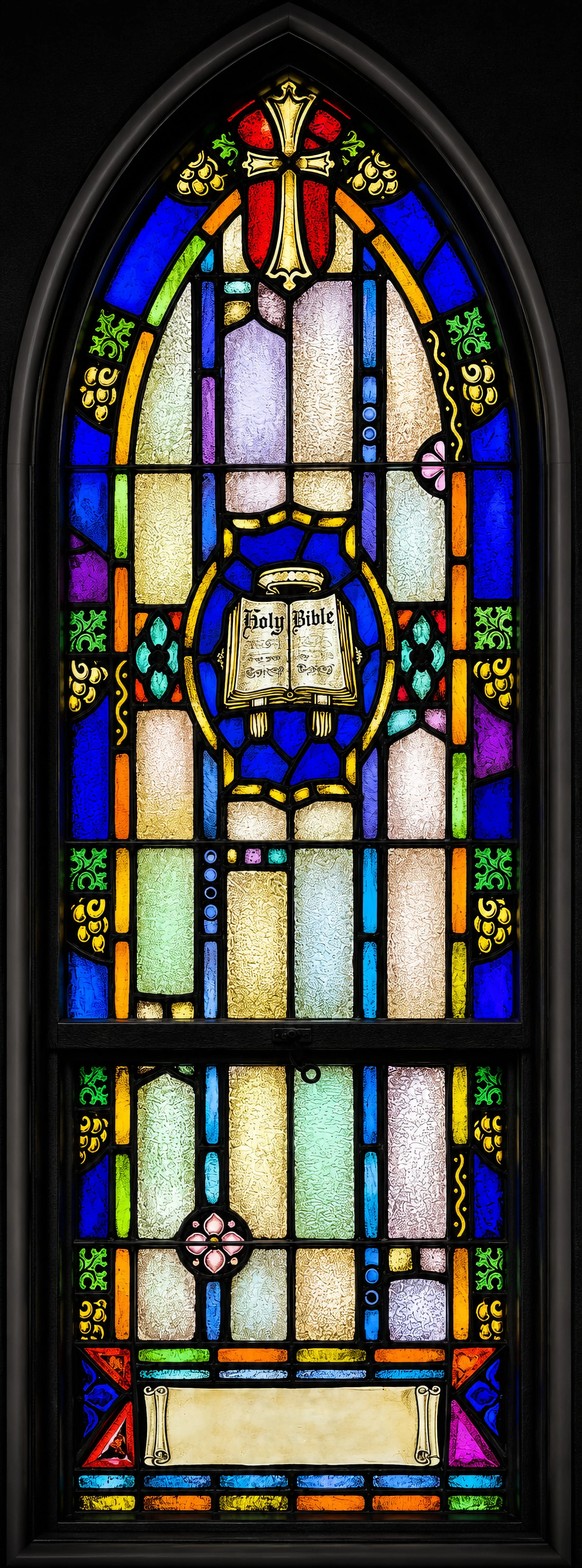
Two smaller windows on chapel side wall, designed by Bishop Mitchell, name the twin centers of our common life: To the left, an open Bible inscribed "Holy Bible" for the preaching of the Word.
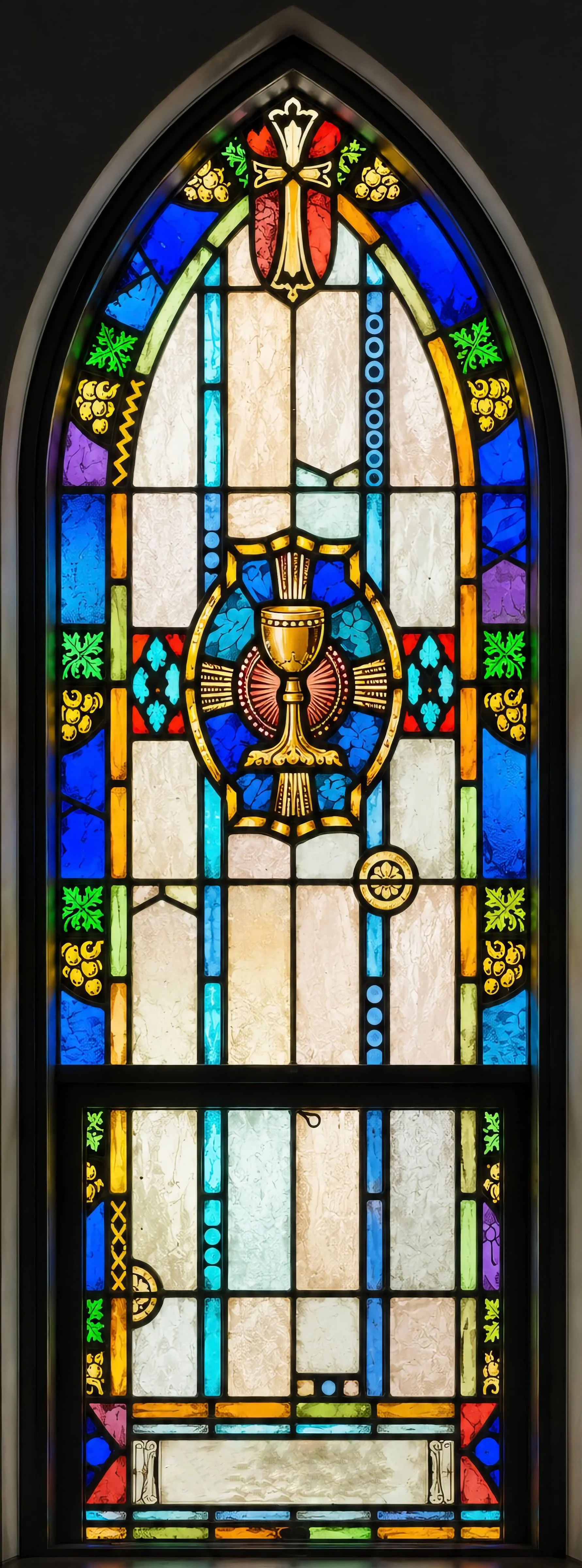
To the right, a chalice with paten for the celebration of Holy Communion.
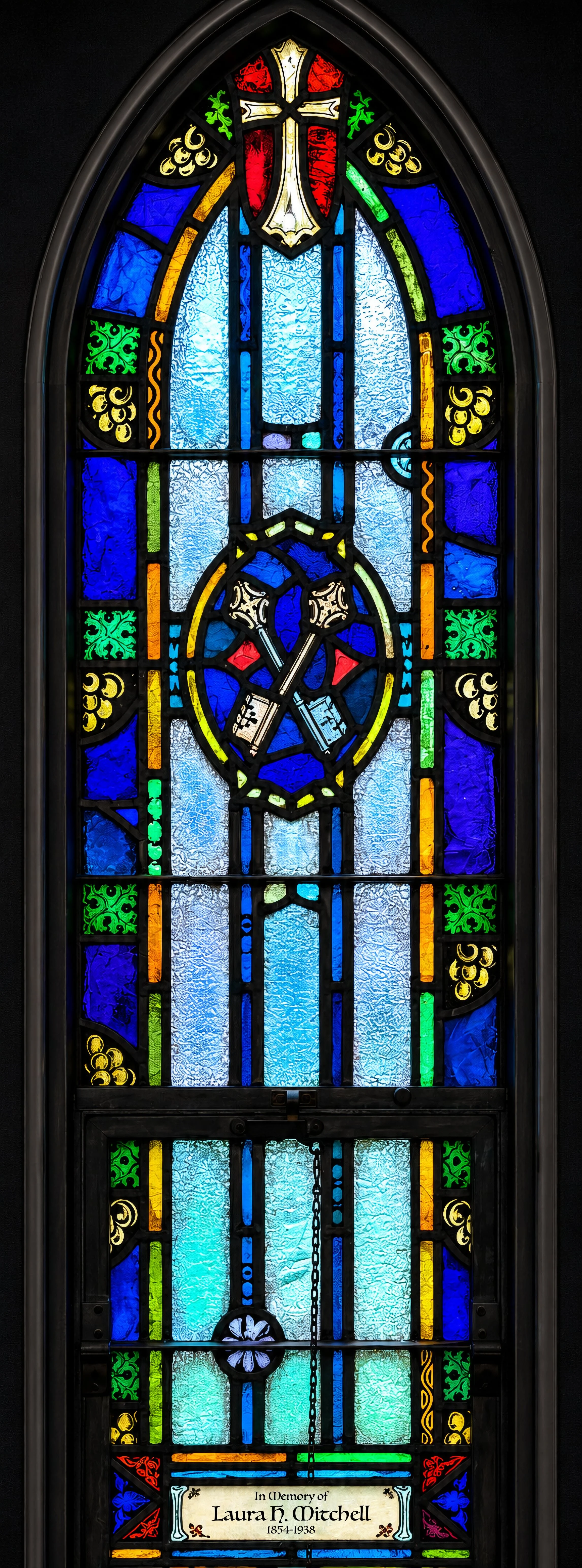
In the chapel vestibule, the two memorial windows here honor women who were members of St. Peter's Mission at its 1900 organization. Bishop Mitchell selected the symbols: On the Memorial Garden side, crossed keys for St. Peter, to whom Christ said, "I will give you the keys of the Kingdom of Heaven" (Matthew 16:19).
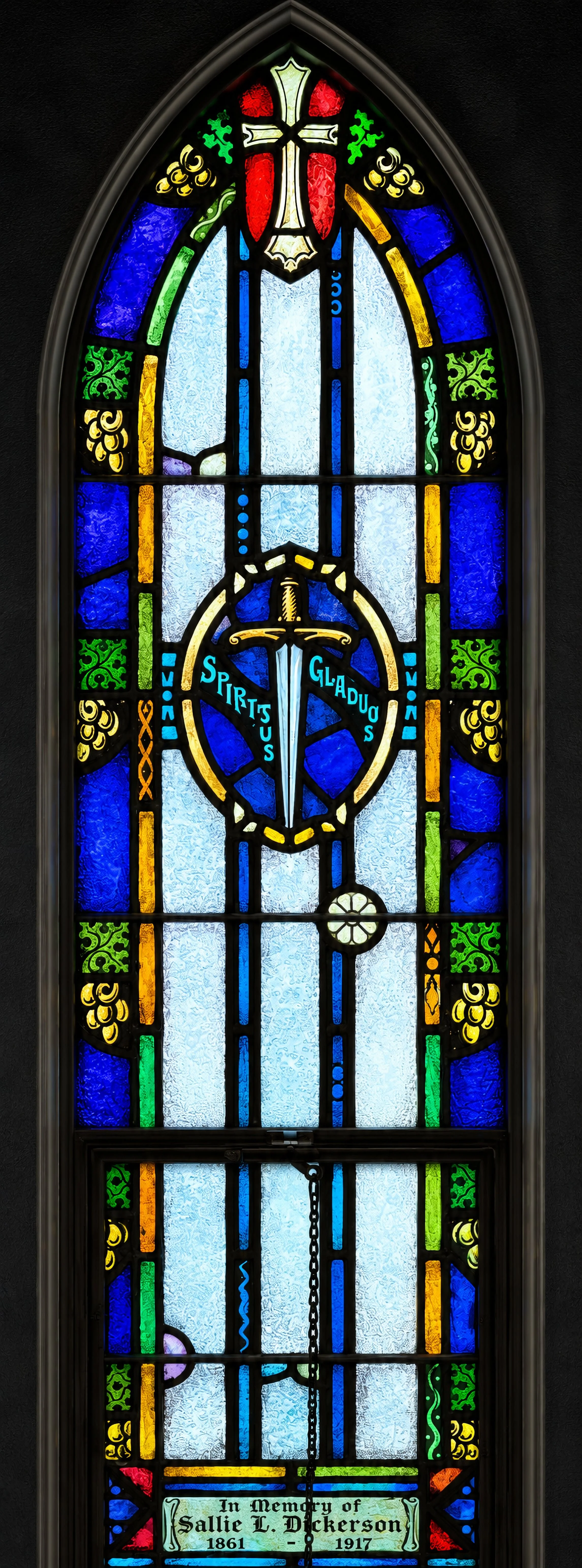
On the Prince Street side, the Sword of the Spirit (Spiritus Gladius) for St. Paul, who wrote of "the sword of the Spirit, which is the Word of God" (Ephesians 6:17).
The Sacraments of Entry (Narthex, inner wall)
Flanking the main door, near the baptismal font, two windows mark Baptism as our entry into the life of the Church.
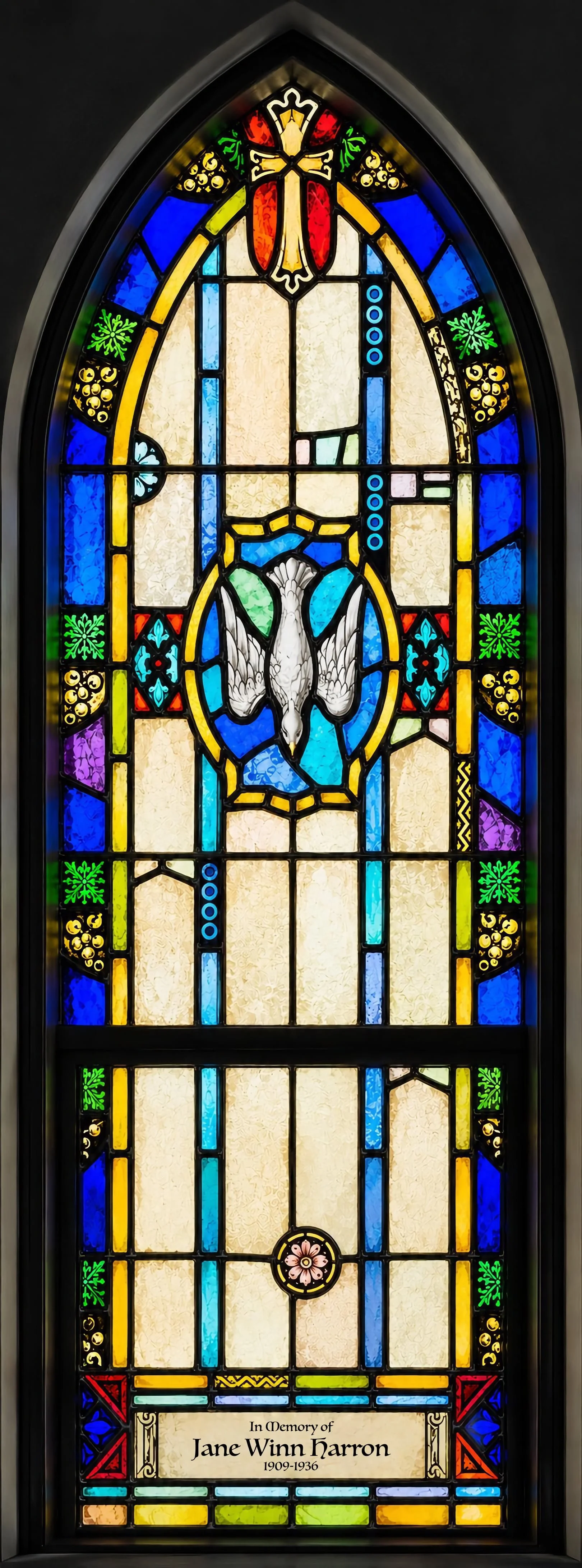
The Descending Dove. The same Holy Spirit who hovered above Christ in the Chapel window, here descending to bless the waters of Baptism.
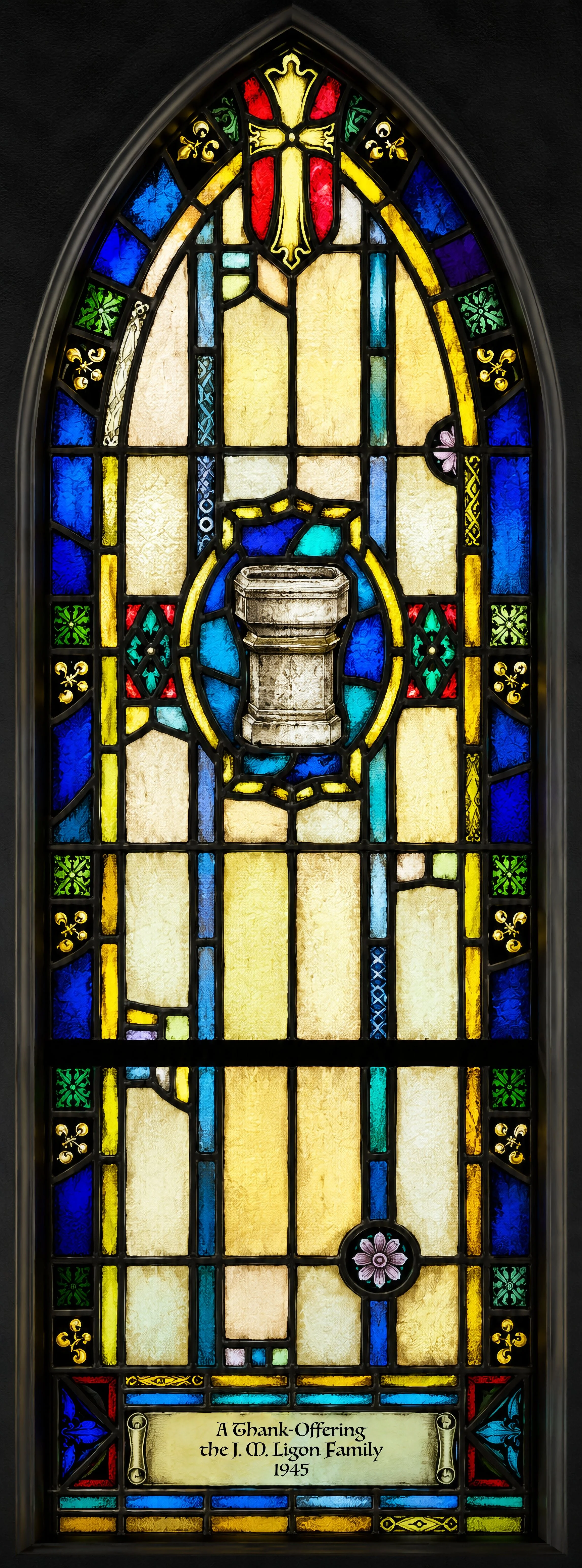
The Font. A baptismal font much like our own.
The Life of Christ (Narthex, outer wall)
Ten windows designed by the Rev. Limuel G. Parks line the outer wall of the Narthex, facing the original church across the courtyard. Read in order from the Lobby door, they trace the arc of Christ's life.
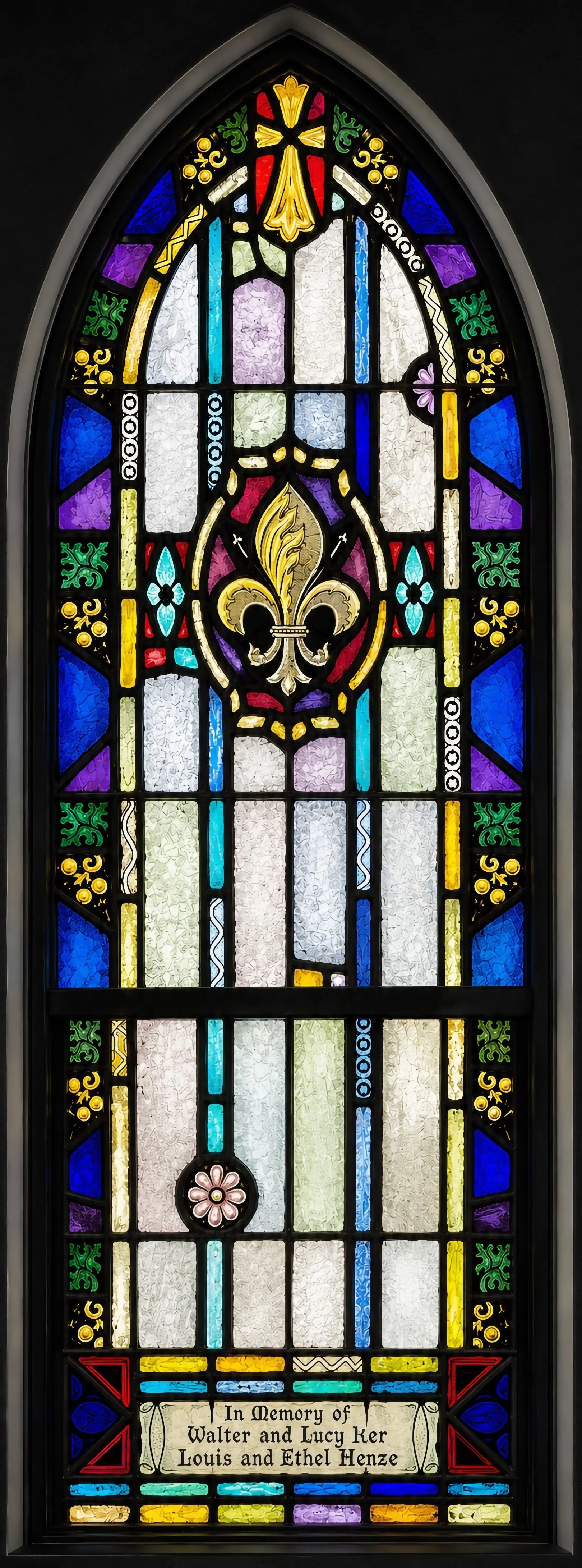
Annunciation. A fleur-de-lis — symbol of purity and royalty, traditionally associated with Mary — recalls Gabriel's announcement of Christ's coming birth (Luke 1:26–32).
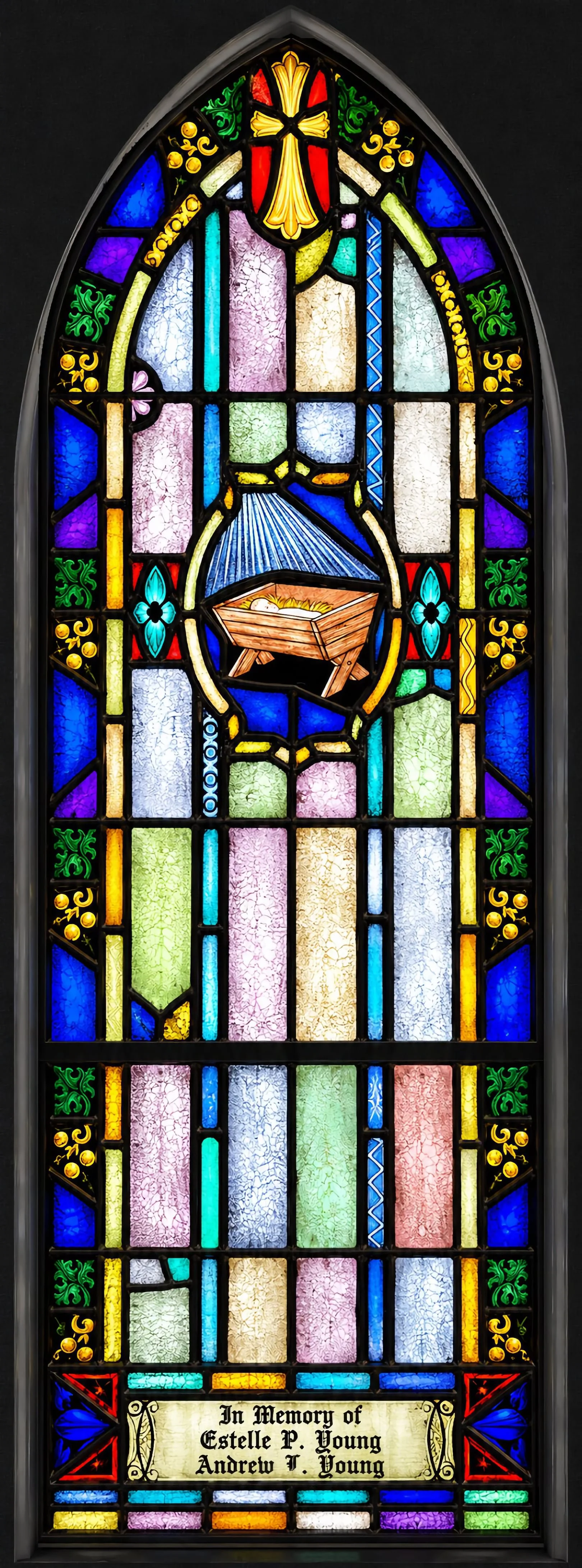
Nativity. The manger of Bethlehem, with a star above (Luke 2:4–7).
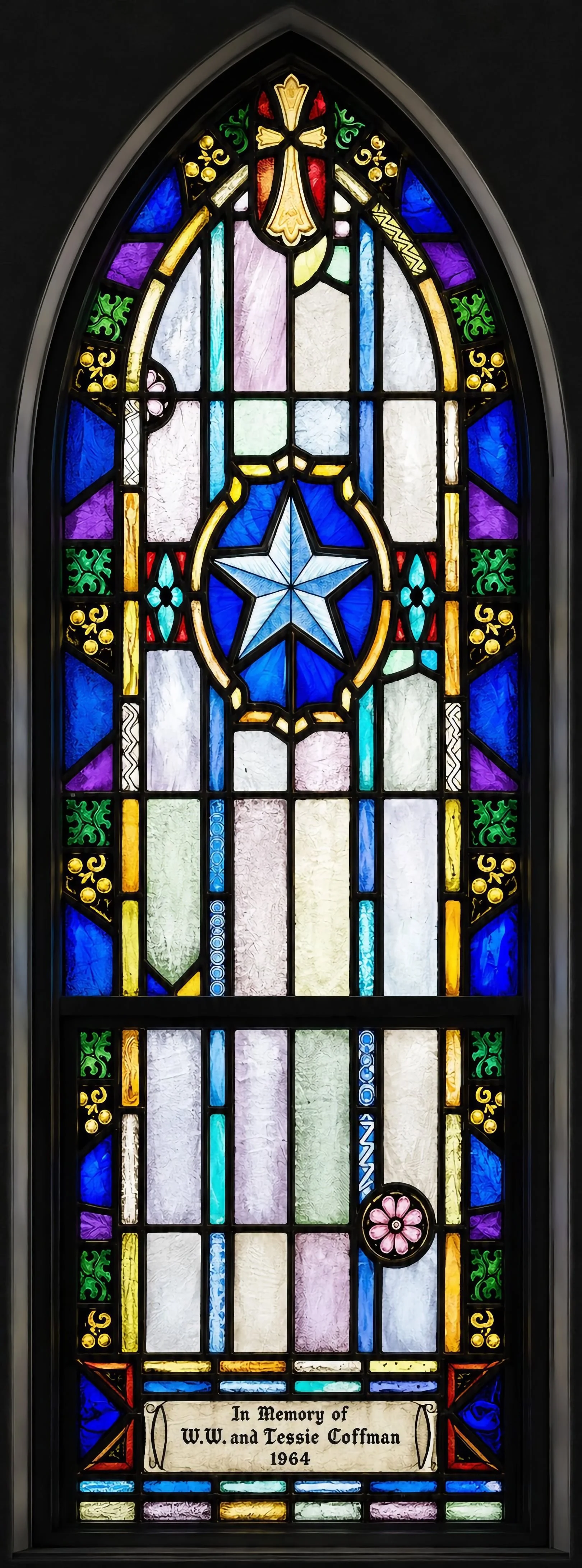
Epiphany. The Star that led the Magi to worship the Christ child (Matthew 2:1–11).
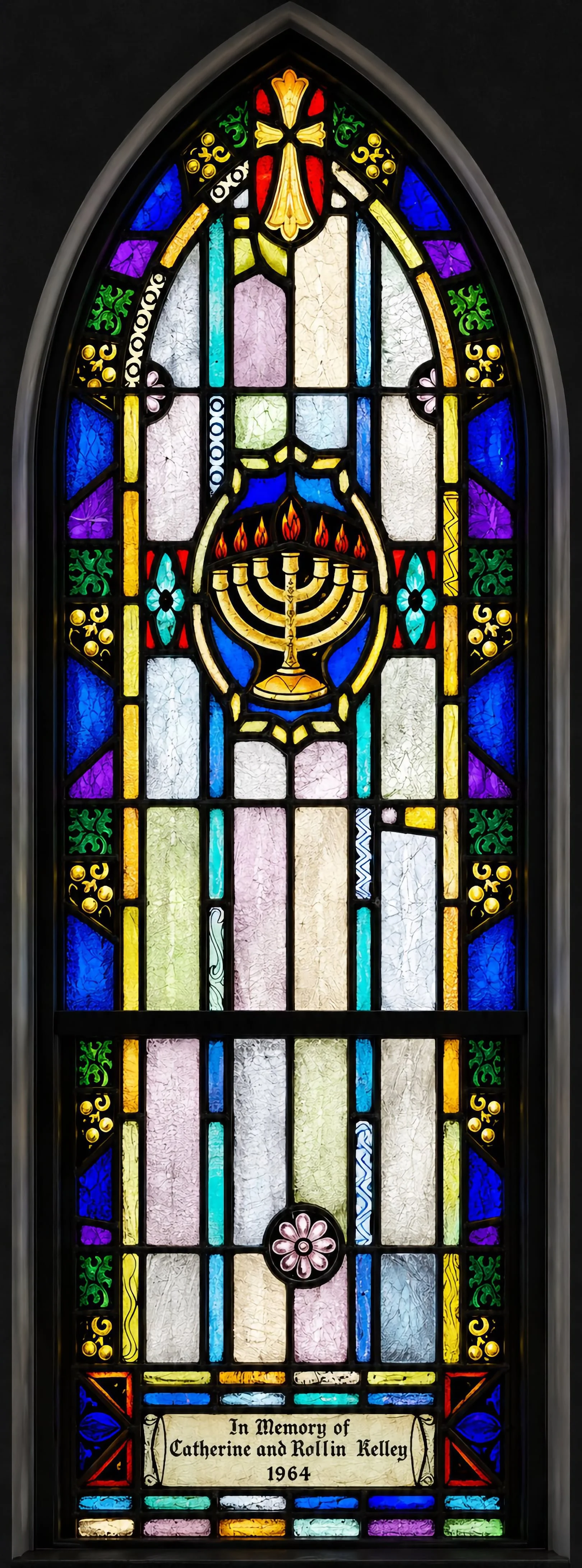
The Boy Jesus in the Temple. A seven-branched menorah represents the Temple in Jerusalem, where the twelve-year-old Jesus astonished the teachers with his understanding (Luke 2:41–51).
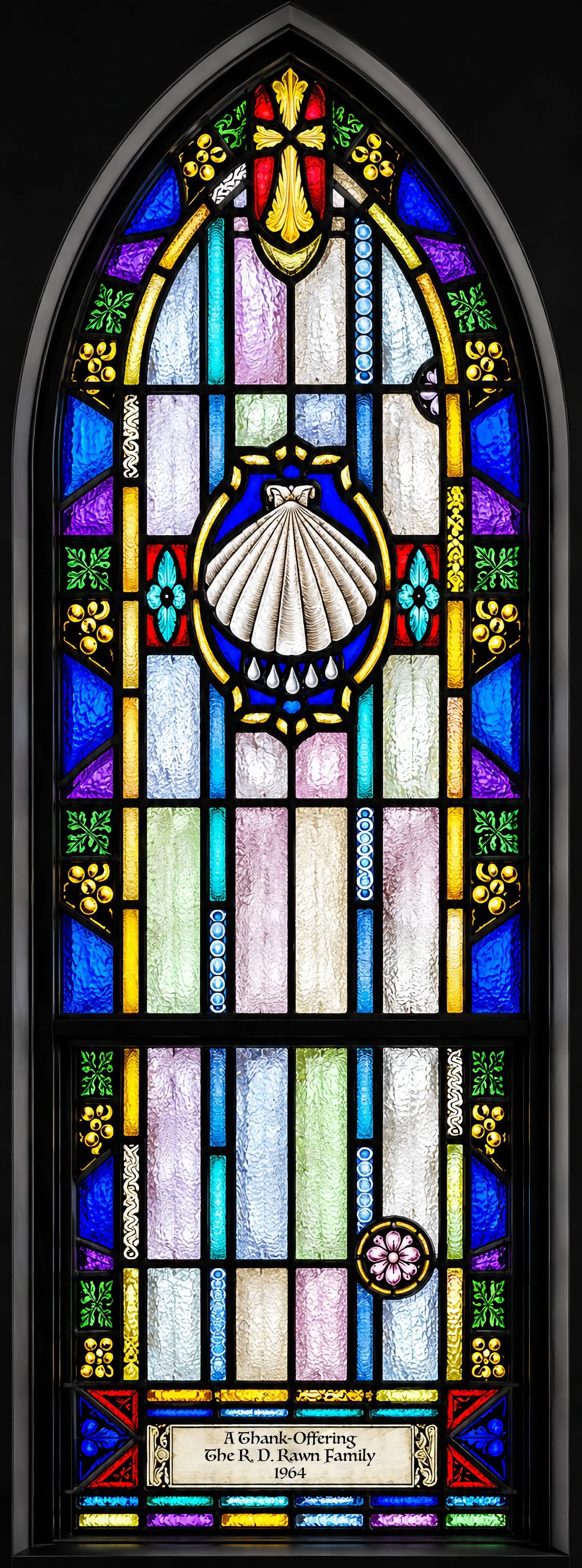
Baptism. A scallop shell with drops of water recalls Christ's baptism in the Jordan (Mark 1:9–11). Medieval pilgrims to the shrine of St. James at Compostela wore the scallop as their emblem; here it suggests that our own pilgrimage, like Christ's ministry, begins in the waters of Baptism.
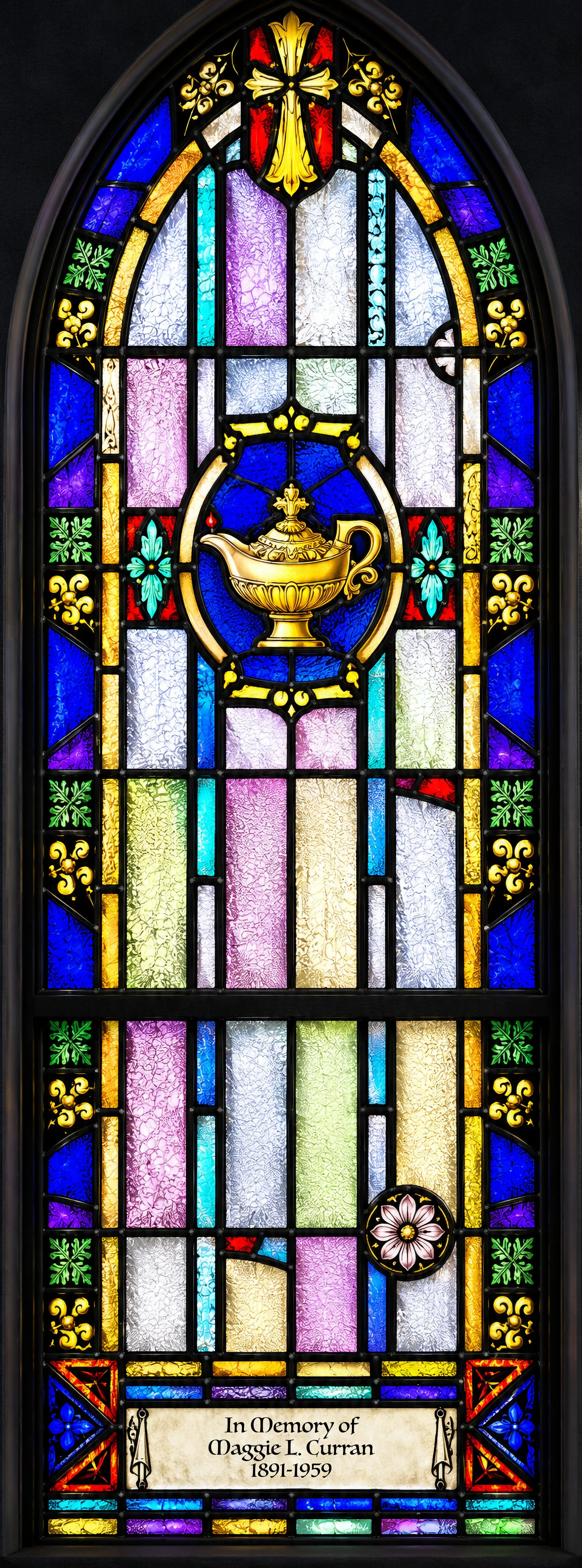
Teaching Ministry. An oil lamp, scriptural symbol of wisdom and the Word of God (Psalms 43:3; 119:105), points to the Sermon on the Mount (Matthew 5–7).
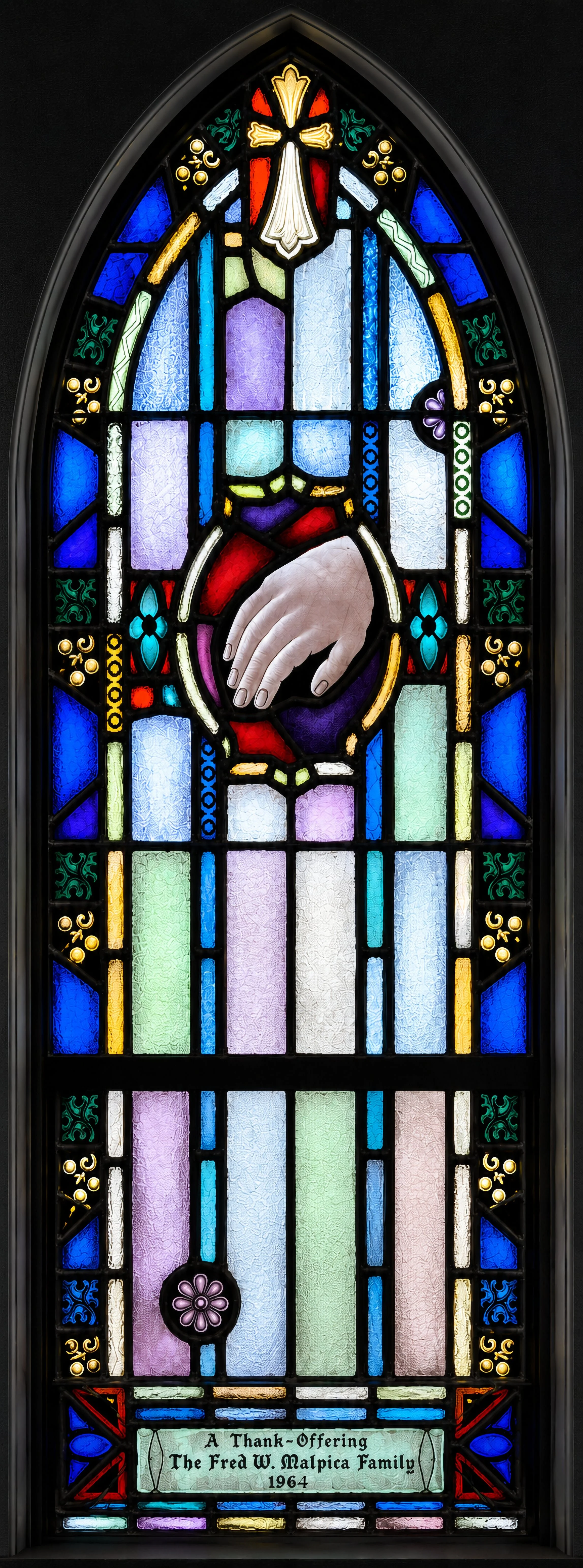
Healing Ministry. A hand recalls the many Gospel accounts of Christ healing by touch — a gesture the Church continues in the laying on of hands at Confirmation, Ordination, and services of healing.
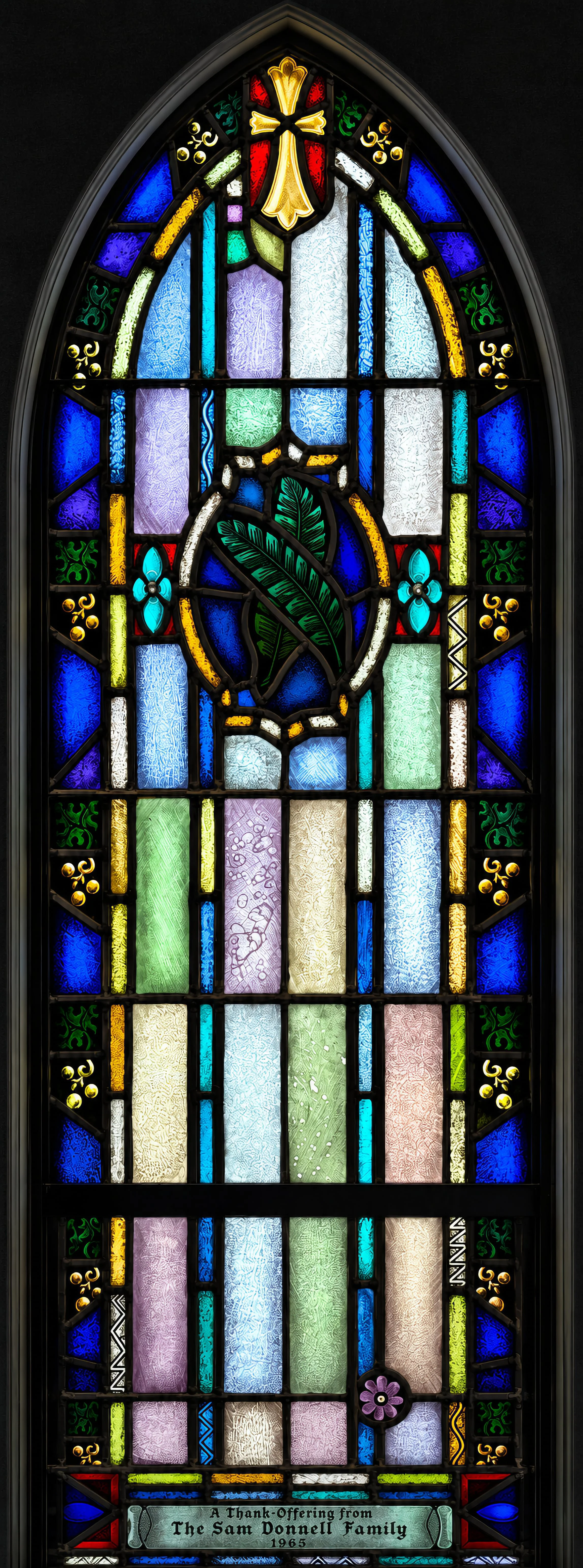
Palm Sunday. Palm branches mark Christ's triumphal entry into Jerusalem on the eve of Passover (John 12:12–14), ancient symbols of victory and royalty.
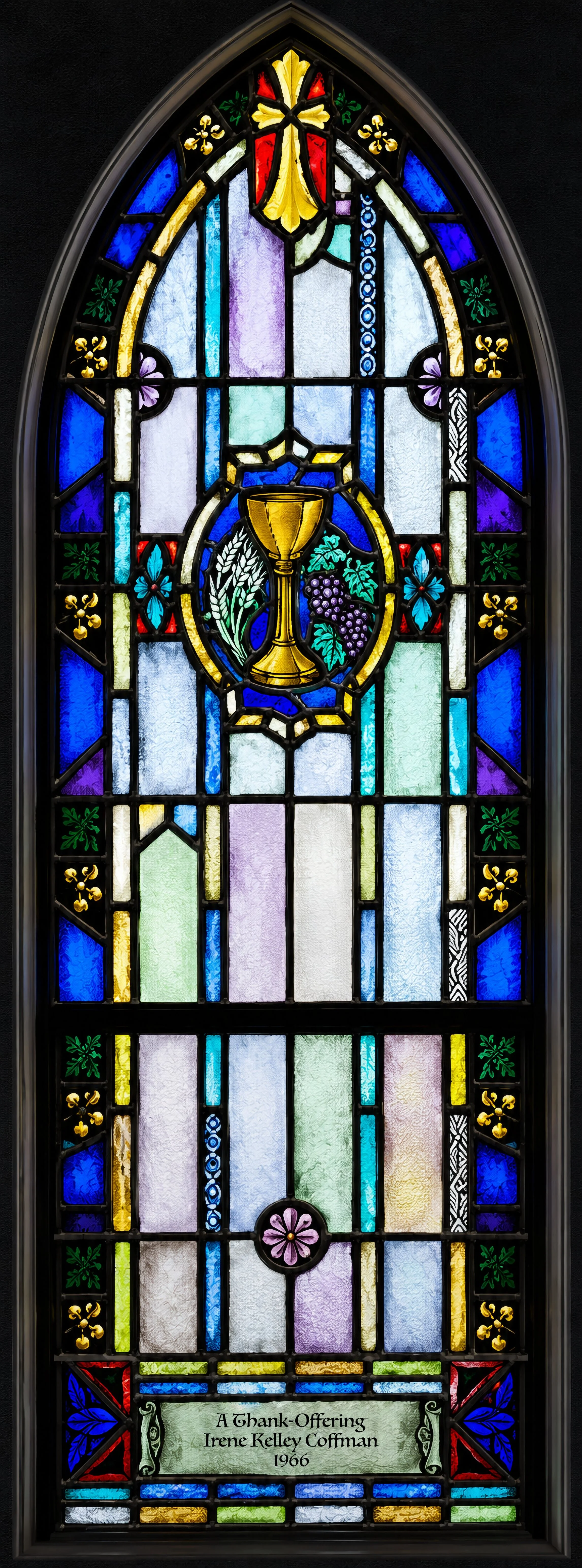
The Last Supper. A chalice with wheat and grapes recalls the institution of the Holy Eucharist (Matthew 26:26–28; Mark 14:22–24).
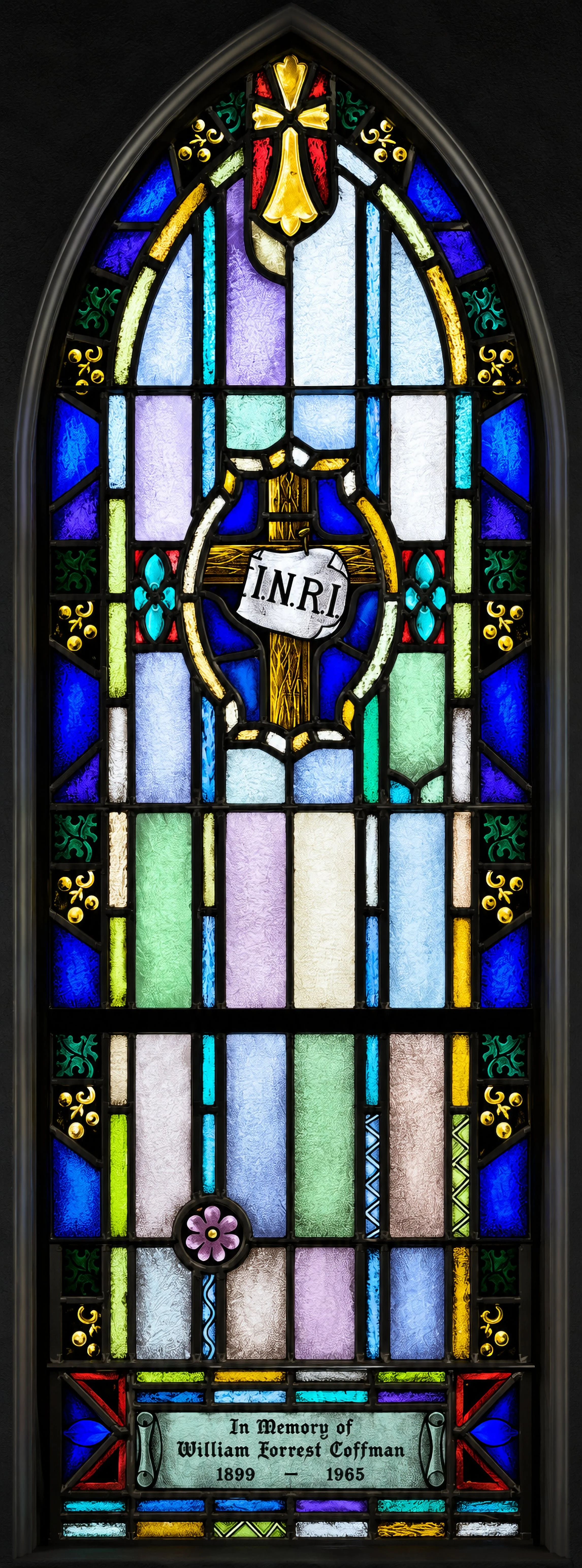
Crucifixion. The cross bears the initials I.N.R.I. — Iesus Nazarenus Rex Iudaeorum, "Jesus of Nazareth, King of the Jews" — the title affixed by order of Pontius Pilate (John 19:19–20).
The Dormer Windows
Four dormer windows in the nave itself, also designed by Fr. Parks, complete the story of Christ and honor figures essential to St. Peter's history.
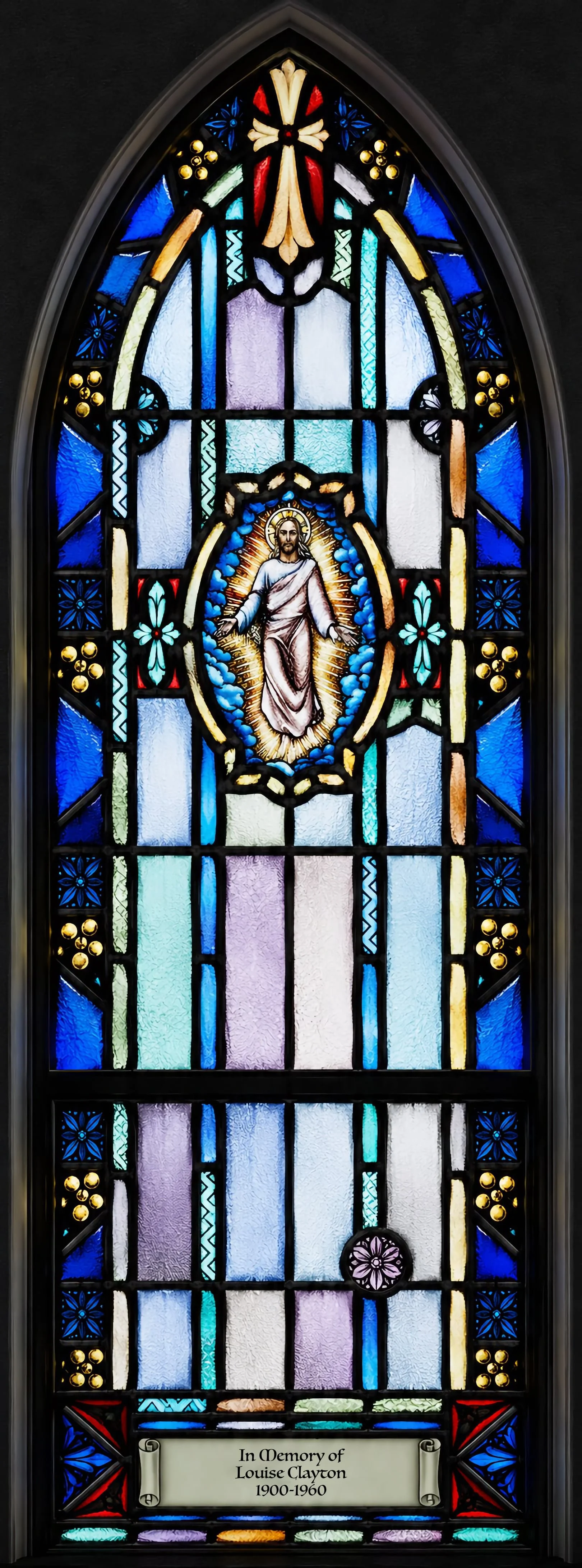
Ascension (Gospel side). Christ rising in glory, his body encircled by an aureole, the edge of the earth visible beneath his feet (Acts 1:9). Given "In Memory of Louise Clayton, 1900–1960."
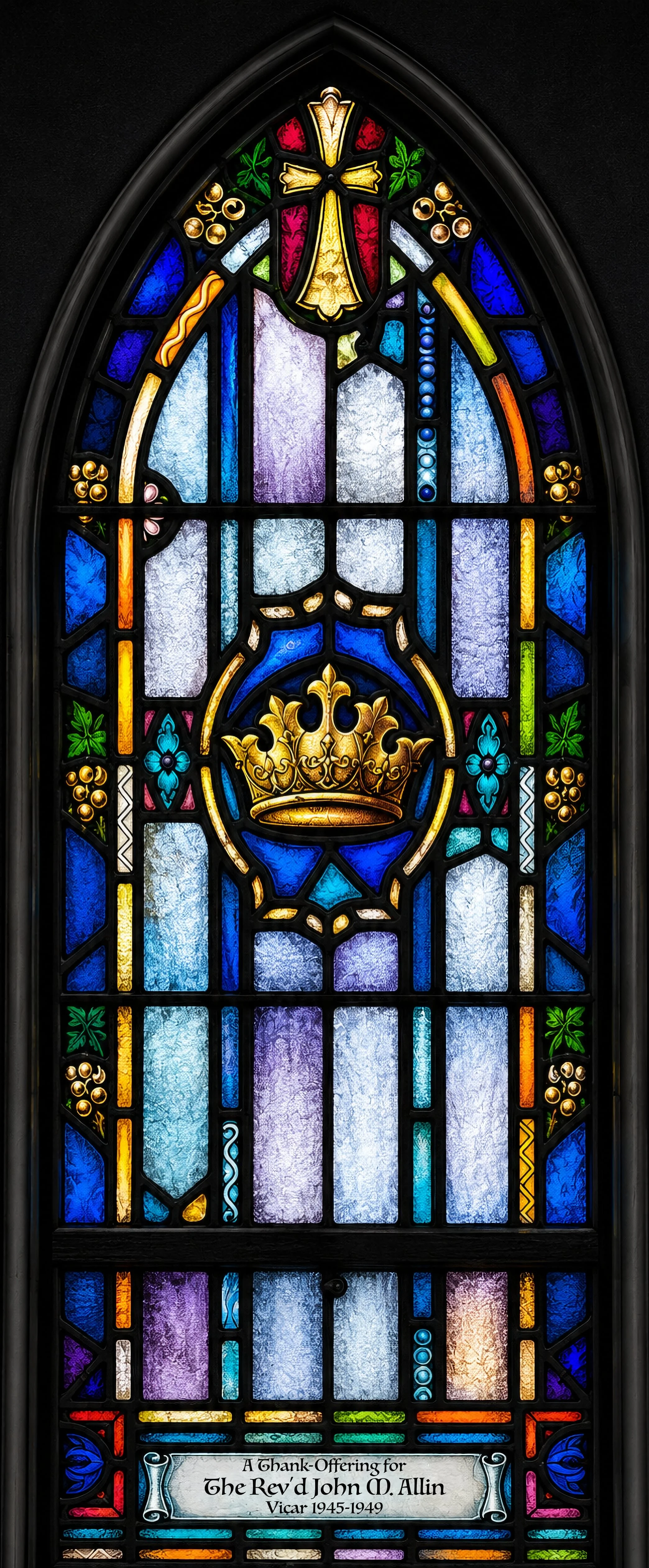
Christ the King (Epistle side, nearest the door). A golden crown — "for he is Lord of Lords, and King of Kings" (Revelation 17:14). Given as "A Thank-offering for the Rev. John M. Allin, Vicar 1945–1949," who later served as Bishop of Mississippi and Presiding Bishop of The Episcopal Church.
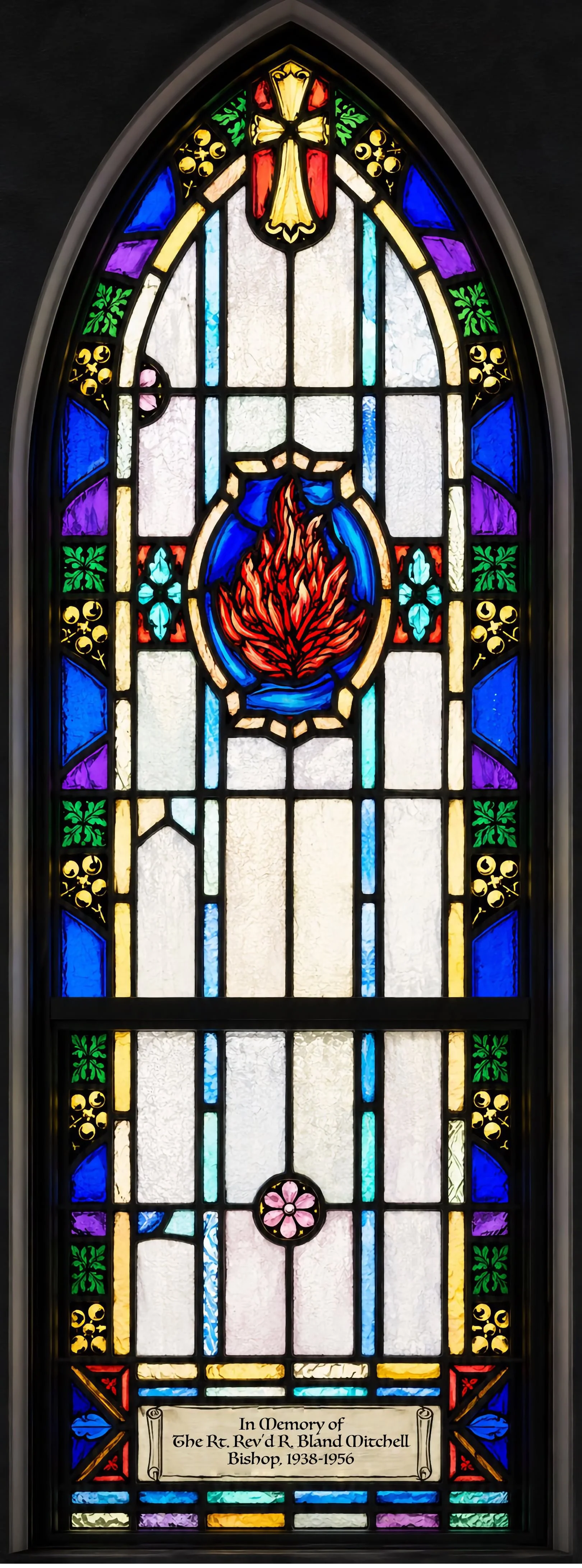
Pentecost (Epistle side, nearest the altar). A tongue of fire descends, as on the apostles at the birth of the Church (Acts 2:2–4). Given "In Memory of the Rt. Rev. R. Bland Mitchell, Bishop, 1938–1956" — fittingly, since Bishop Mitchell designed both the Chapel windows and the original church building itself.
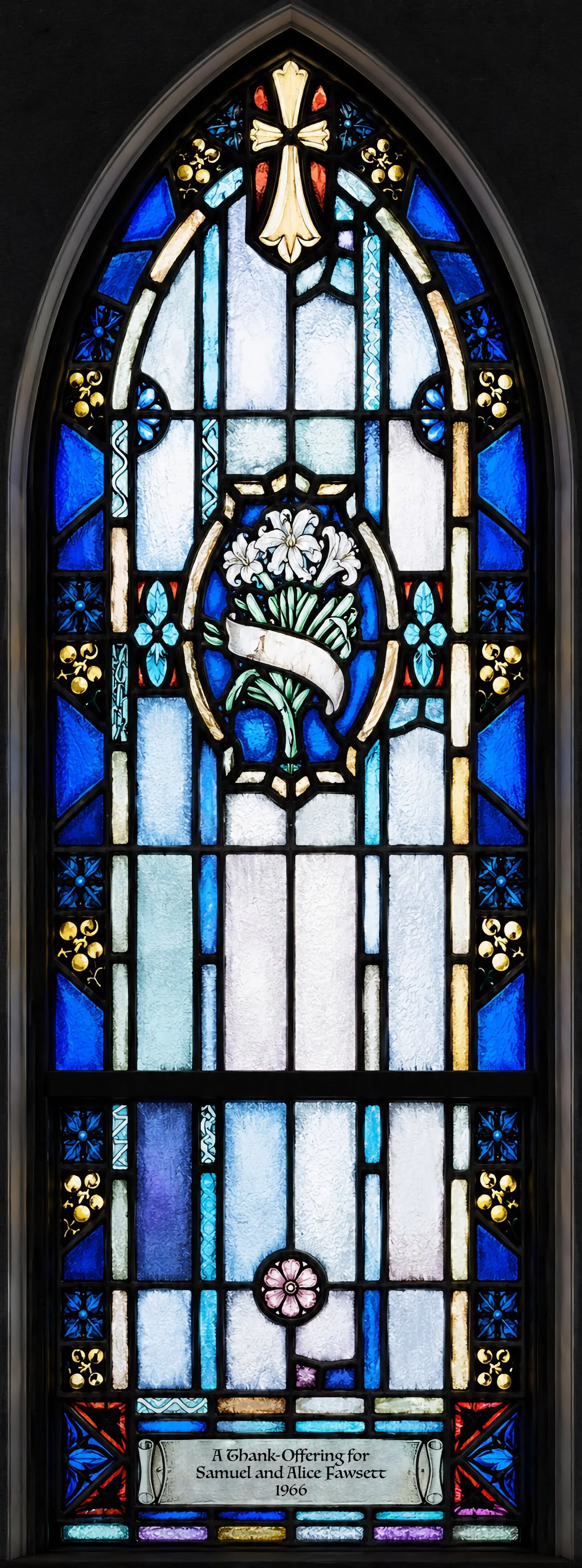
Resurrection (Gospel side, nearest the altar). Easter lilies. Given as "A Thank-offering for Samuel and Alice Fawsett, 1966."